
Blog
Peptide Science Nebraska

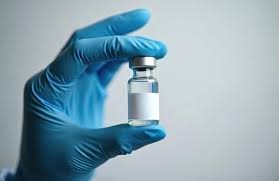
Peptide Science Nebraska: The Cornhusker State’s Quiet Revolution in Regenerative Medicine
When the world thinks of Peptide Science Nebraska, it thinks of cornfields, cattle feedlots, and the sprawling Sandhills. It rarely thinks of biochemistry. Yet, beneath the surface of the Great Plains, a quiet scientific revolution is taking root. Peptide Science Nebraska—the study of short amino acid chains that act as signaling molecules—is finding a unique and powerful home in the Cornhusker State.
Unlike the biotech hubs of Boston or San Francisco, Nebraska’s approach to peptide research is utilitarian. It is driven not by venture capital hype, but by three concrete needs: massive livestock health management, rural wound care, and the metabolic health of a largely aging, rural population. In Nebraska, peptides are moving from the theoretical petri dish into the practical barn and clinic with remarkable speed.
The Backbone: Understanding the Molecule
To appreciate the “Nebraska Method,” one must understand the science. Peptides are smaller than proteins but larger than individual amino acids. They function as the body’s text messages—short, specific, and fast-acting. While a protein might take hours to initiate a response, a peptide can signal a cell to reduce inflammation, regenerate tissue, or release hormones within minutes.
Synthetic peptides offer a major advantage over traditional pharmaceuticals: specificity. A well-designed peptide targets a single receptor, reducing the “off-target” side effects common to many drugs. This precision makes them ideal for the two pillars of Nebraska’s economy: agriculture (where treating a $5,000 cow requires cheap, effective medicine) and aging human health (where seniors need therapies that don’t interact with 12 other medications).
The “N” Advantage: Why Nebraska?
Why is Nebraska emerging as a micro-hub for peptide science? The answer lies in what locals call the “N Advantage”—necessity and nexus.
Necessity: Nebraska is rural. The distance between a ranch in the Panhandle and a veterinary hospital in Omaha can be 400 miles. When a prize bull tears a ligament or a rancher cuts their hand on barbed wire, immediate surgical intervention is rarely an option. This geographic reality forces researchers to develop therapies that are stable, injectable, and capable of accelerating healing without surgical follow-up.
Nexus: The state is home to the University of Nebraska-Lincoln (UNL) and the University of Nebraska Medical Center (UNMC) in Omaha. This creates a rare “one health” environment where veterinary and human medical researchers work side by side. Peptide discoveries made in a feedlot can be translated into human wound care protocols, and vice versa.
Veterinary Peptides: The $10 Billion Feedlot Opportunity
The most immediate and economically significant application of peptide science in Nebraska is in livestock.
Nebraska is a top-three beef producer in the United States, managing millions of head of cattle annually. Traditional veterinary medicine relies heavily on antibiotics and steroids. However, with growing consumer demand for antibiotic-free beef and increasing bacterial resistance, ranchers are desperate for alternatives.
BPC-157 for Bovine Lameness
Lameness (foot rot, hoof abscesses, and joint infections) is the second-largest health cost in feedlots, behind only respiratory disease. Nebraska-based veterinary researchers are pioneering the use of BPC-157 (Body Protection Compound). Originally discovered in human gastric juice, BPC-157 is a potent promoter of tendon and ligament healing.
In pilot studies conducted on mixed-breed yearlings, BPC-157 injected directly into the coronary band (the area where the hoof meets the hide) reduced recovery time from severe lameness by nearly 50% compared to traditional oxytetracycline antibiotics. More importantly, it required no withdrawal period, allowing the animal to return to feed without the 30-day “meat hold” required for many antibiotics.
Thymosin Alpha-1 for Respiratory Disease
Bovine Respiratory Disease (BRD), often called “shipping fever,” kills hundreds of thousands of calves annually. It is a complex interaction of viral and bacterial infection exacerbated by stress.
Researchers at UNL’s Great Plains Veterinary Educational Center are investigating Thymosin Alpha-1 (TA-1), a peptide that modulates the immune system. Unlike a vaccine, which teaches the body to recognize a specific pathogen, TA-1 acts as a general “immune switch,” activating natural killer cells and T-cells. When administered to high-risk calves upon arrival at a feedlot, TA-1 has been shown to reduce the incidence of BRD by up to 30%, while requiring no withdrawal time. For a feedlot processing 50,000 head per year, this represents millions of dollars in saved mortality and pharmaceutical costs.
Equine Performance: The Quarter Horse Connection
Beyond cattle, Nebraska has a deep equine tradition, specifically regarding Quarter Horses used for cutting, reining, and rodeo events. These animals are prone to suspensory ligament desmitis and flexor tendon injuries—injuries that are often career-ending.
Montana and Kentucky get the headlines, but Nebraska compounding pharmacies are becoming leaders in TB-500 (Thymosin Beta-4) therapy for horses. TB-500 promotes actin regulation, essentially telling cells to migrate to the site of injury and rebuild the cytoskeleton.
Anecdotal data from Nebraska equine practitioners suggests that a course of TB-500, combined with controlled exercise, can return a horse with a moderate suspensory tear to full work in 60 days, compared to the standard 6–9 months of stall rest. This is transformative for the rodeo circuit, where a summer season cannot be missed.
Human Health: Wound Care and Rural Medicine
Shifting from the barn to the hospital, Nebraska faces a human health crisis common to rural states: a high prevalence of diabetes and the subsequent complication of non-healing wounds.
Nebraska has a diabetic rate slightly above the national average. For a farmer or a factory worker in Grand Island or North Platte, a diabetic ulcer on the foot can lead to amputation within a year. The nearest wound care specialist might be two hours away. This is where peptide science is bridging the gap.
LL-37: The Endogenous Antimicrobial
LL-37 is the only known human cathelicidin-derived antimicrobial peptide. It kills bacteria, neutralizes endotoxins, and promotes angiogenesis (growth of new blood vessels).
Nebraska researchers at UNMC are developing topical creams containing synthetic LL-37 specifically for diabetic foot ulcers. In preclinical models, LL-37 not only cleared biofilm infections (like MRSA and pseudomonas) that are resistant to oral antibiotics but also accelerated the closure of the wound bed. For a diabetic patient in rural Nebraska, applying a peptide cream at home could mean the difference between keeping a foot and losing it to sepsis.
BPC-157 for Gut Health (The Feedlot Connection)
Interestingly, the human application drawing the most interest in Nebraska is BPC-157 for inflammatory bowel disease (IBD) and leaky gut. Why? Because Nebraskans eat a lot of beef and corn—a diet high in fat and starch that can aggravate the gut lining.
Local functional medicine doctors are prescribing BPC-157 (in oral, stable form) to patients with Crohn’s disease and ulcerative colitis. The peptide appears to promote the healing of the intestinal epithelium, reducing the “leakiness” that drives systemic inflammation. While still experimental, the anecdotal results from the Great Plains are compelling enough to attract attention from larger pharmaceutical interests.
The Delivery Problem: Injections vs. Oral
The single greatest hurdle for peptide science in Nebraska is the same as everywhere else: bioavailability. Most peptides are degraded by stomach acid and digestive enzymes. Currently, 90% of therapeutic peptides must be injected subcutaneously.
However, Nebraska is uniquely positioned to solve this. The state has a strong history of food science and encapsulation technology (due to its agricultural processing industry). Researchers at UNL’s Department of Food Science are applying lipid encapsulation and enteric coating technologies—traditionally used for probiotics—to peptides.
The goal is a pill that survives the stomach and releases the peptide in the small intestine or colon. If successful, a diabetic in McCook could take an oral BPC-157 pill instead of driving 150 miles for a daily injection.
The Regulatory Landscape: The “Research Chemical” Problem
No article on modern peptide science is complete without addressing the elephant in the room: the grey market.
In Nebraska, as elsewhere, bodybuilders and biohackers are buying lyophilized (freeze-dried) peptides labeled “for research use only” from internet vendors and injecting them in their basements. This is dangerous. Impure peptides can cause sterile abscesses, immune reactions, or life-threatening anaphylaxis.
Nebraska’s advantage, however, is its robust system of state-licensed compounding pharmacies. Unlike the unregulated grey market, a compounding pharmacy requires a prescription from a licensed physician or veterinarian. These pharmacies use HPLC (High-Performance Liquid Chromatography) to verify purity (typically 98–99%) and sterility.
The Nebraska Board of Pharmacy has taken a moderate stance: they allow the compounding of peptides like BPC-157, TB-500, and Semax, provided there is a legitimate medical need and no commercially available alternative. This “middle way” allows patients and animals to access cutting-edge therapies without resorting to bathtub chemistry.
The Future: Gene Therapy and Peptide-Antibody Conjugates
Looking ahead, the next five years in Peptide Science Nebraska will focus on two advanced areas:
- Stapled Peptides: These are chemically “stapled” into a rigid shape, making them resistant to enzymatic degradation and capable of crossing cell membranes. UNMC is researching stapled peptides that can enter cancer cells and disrupt protein-protein interactions—a feat impossible for traditional drugs.
- Peptide-Antibody Conjugates (PACs): This technology uses a peptide as a “warhead” attached to an antibody “missile.” The antibody guides the peptide to a specific cell (e.g., a tumor cell or a specific bacteria), and the peptide delivers the therapeutic payload. For feedlot use, this could mean an antibiotic that kills only Mannheimia haemolytica (the bacteria causing shipping fever) while leaving the rest of the bovine microbiome intact.
Conclusion
Peptide Science Nebraska is not about flashy press releases or billion-dollar IPOs. It is about solving hard, practical problems with elegant molecular tools. It is about healing a cow’s foot so it can walk to the feed bunk. It is about sealing a diabetic ulcer so a grandfather can keep his foot. It is about finding a way to make a molecule stable enough to survive a 400-mile truck ride across the Sandhills.
The Cornhusker State may never be confused with Kendall Square, but it doesn’t need to be. By focusing on high-impact, real-world applications in agriculture and rural medicine, Nebraska is quietly becoming a leader in applied peptide science—one injection, one healed tendon, one saved limb at a time. The future of regenerative medicine may not be written on the coasts; it may be written in the feedlots and clinics of the Great Plains.