
Blog
Peptide Science New York

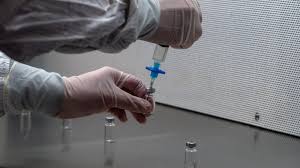
From the lab benches of Manhattan to the biotech incubators of Brooklyn, New York City is orchestrating a renaissance in the study of one of biology’s most essential molecules:Peptide Science New York. A century after Columbia University experiments first illuminated the building blocks of life, the city has emerged as a global nerve center for Peptide Science New York. By seamlessly integrating foundational research with cutting-edge drug development and high-tech manufacturing, Peptide Science New York is accelerating the peptide revolution—where short chains of amino acids are increasingly solving some of medicine’s most intractable challenges.
Peptide Science New York The Historical Roots of a Scientific Revolution
New York’s deep connection with peptide science began in the mid-20th century with a transformative breakthrough. In 1963, biochemist Bruce Merrifield, working at Rockefeller University, introduced solid-phase peptide synthesis (SPPS) . This ingenious method anchored growing peptide chains to an insoluble resin, eliminating the need for the painstaking intermediate purifications that had long plagued the field. The automation that SPPS enabled would later become the foundation upon which the modern peptide industry was built, earning Merrifield the Nobel Prize in Chemistry in 1984 and cementing New York’s status as a cradle of the field.
A Living Laboratory: Peptide Research Across New York’s Leading Institutions
The spirit of Merrifield’s innovation thrives today across a network of world-class research centers, each contributing a distinct piece to the peptide puzzle.
Advanced Science Research Center (CUNY ASRC)
Based at the CUNY Graduate Center, the lab of Rein Ulijn is pioneering “minimalist” peptide systems that challenge conventional assumptions about molecular complexity. In August 2025, the team reported in Nature Materials that peptides as short as three amino acids can undergo a process remarkably similar to liquid-liquid phase separation . This discovery—showing how simple peptides can protect sensitive biomolecules and release them intact upon rehydration—offers a pathway to stabilize vaccines and protein therapeutics without the need for constant cold storage, a game-changer for global health logistics.
NYU and the Precision Targeting of Protein-Protein Interactions
At New York University, the Arora Lab designs synthetic molecules to modulate protein-protein interactions—the intricate cellular handshakes often implicated in diseases like cancer and neurodegeneration. A standout contributor is Ph.D. candidate Thu Nguyen. Her approach focuses on trapping “intrinsically disordered proteins”—molecules that lack a fixed shape and have therefore been elusive targets for drug development . Her work on the oncoprotein MYC earned her first prize in the 2025 Dr. Elizabeth Schram Award at the American Peptide Society’s biennial symposium, highlighting how New York is training the next generation of leaders . This effort is complemented by the Kirshenbaum Lab, which is creating “peptoid” oligomers—peptide-like polymers that integrate the properties of biopolymers and synthetic polymers—to develop new therapeutic strategies for bacterial infections and prostate cancer .
Columbia University and the Foundations of Future Science
At Columbia, researchers like those in the Obermeyer Lab are engineering protein assemblies for applications in stabilization and drug delivery . And it was at Columbia that the legendary Miller-Urey experiment first demonstrated how amino acids—the fundamental units of peptides—could form spontaneously under simulated early-Earth conditions. That legacy continues to inspire Columbia’s role in educating the next generation of peptide chemists through specialized graduate-level courses .
Translational Powerhouses: Weill Cornell Medicine and Memorial Sloan Kettering
The translation of basic peptide research into clinical reality is a defining feature of New York’s ecosystem. At Weill Cornell Medicine, scientists are exploring everything from enhanced drug delivery systems to next-generation diabetes treatments . At Memorial Sloan Kettering (MSK), the Cancer Nanomedicine Laboratory, led by Daniel Heller, is achieving tangible patient impact. In a 2025 breakthrough, Heller’s team used specially designed peptides as excipients to create a nanoparticle-drug formulation that dramatically boosted antitumor efficacy in acute myeloid leukemia models .
New York’s Role in a Multi-Billion Dollar Peptide Therapeutics Revolution
The scientific energy in New York’s labs is being channeled directly into the fastest-growing segment of the pharmaceutical market: peptide-based drugs. The global peptide therapeutics market is poised for explosive growth, driven by the success of drugs like Ozempic and Wegovy (semaglutide) and Mounjaro (tirzepatide). These glucagon-like peptide-1 (GLP-1) receptor agonists, which revolutionized the treatment of diabetes and obesity, have become blockbuster medicines with multi-billion dollar annual sales.
New York is not just a consumer of these innovations; it is a birthplace. NYU Langone’s Holz Laboratory contributed foundational research that directly helped lead to the FDA approval of major GLP-1 agonists, including the very drugs now reshaping medicine . Today, the city is fueling the next wave of this revolution. Biotech startup RenBio, based in New York, is developing a novel “Make Your Own” gene therapy platform that uses plasmid DNA to instruct a patient’s own muscle cells to produce GLP-1. The therapy, delivered via a brief electrical pulse, has shown in mouse studies the ability to induce sustained weight loss for over a year, potentially freeing patients from weekly injections .
This life-saving research is heavily dependent on robust local industrial infrastructure. Companies like Creative Peptides, headquartered on Long Island, provide the essential contract development and manufacturing services (CDMO) that academic labs and pharmaceutical firms need, offering services from small-scale research peptide synthesis to large-scale GMP manufacturing for clinical trials .
An Unbroken Loop of Innovation
The city’s peptide ecosystem is further accelerated by premier scientific gatherings. The biennial American Peptide Symposium, organized by the American Peptide Society (a 2,100-member global organization), is a highlight of the field’s calendar . The 29th Symposium in 2025 brought the world’s leading minds together, while upcoming events like the TIDES USA conference and the New York Academy of Sciences’ “Chemical Biology: Peptide and Protein Design” conference in 2026 ensure the city remains a permanent hub for high-level collaboration .
These meetings serve a vital purpose, creating a virtuous cycle: they showcase the city’s breakthroughs, attract global talent, and inspire the next wave of research, which is then fed back into the local innovation pipeline.
Outlook: The Future is Being Synthesized in New York
New York’s ascendance as a global hub for peptide science is a story of institutional commitment, world-class talent, and a unique blend of academic freedom and commercial urgency. From the foundational SPPS methodology born at Rockefeller to the novel cancer nanomedicines at MSK, the legacy of innovation is continuous. Looking ahead, emerging themes like AI-driven peptide design, the development of novel bio-inspired materials, and next-generation gene therapies for chronic diseases all point to an accelerating future. Researchers in the city are not just studying peptides—they are re-engineering the very language of molecular communication. As the boundaries of the field expand, New York is solidifying its role not just as a participant, but as a primary architect of the peptide-powered future.