Currently Empty: £0.00

Call Us:

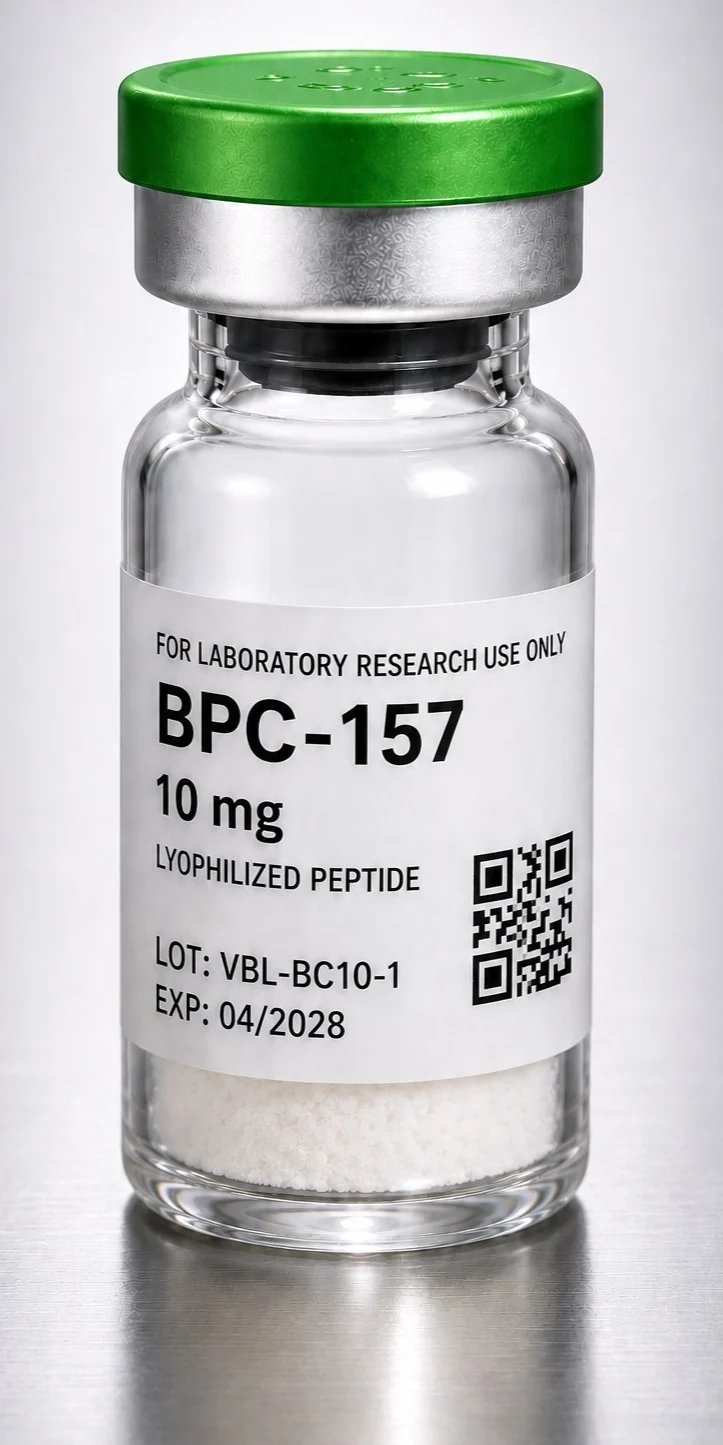


BPC 157 Peptide is a synthetic pentadecapeptide with a rich preclinical research history and a diverse profile of reported biological activities. Its production via Fmoc-based SPPS is well-established, though careful control of synthesis parameters, purification, and formulation is essential to ensure product quality and stability.

Price range: £35.00 through £417.00
BPC 157 Peptide (Body Protection Compound-157) is a synthetic pentadecapeptide composed of 15 amino acids. Its sequence, Gly-Glu-Pro-Pro-Pro-Gly-Lys-Pro-Ala-Asp-Asp-Ala-Gly-Leu-Val, is derived from a partial sequence of a larger protein found in human gastric juice. Since its initial isolation and characterization in the early 1990s by researchers at the University of Zagreb, Croatia, BPC-157 has become one of the most extensively studied peptides in preclinical biomedical research. It has attracted significant attention for its reported pleiotropic cytoprotective and regenerative activities across a wide range of tissue types, including the gastrointestinal tract, musculoskeletal system, cardiovascular system, and nervous system.
This production description provides a comprehensive technical overview of BPC 157 Peptide, detailing its chemical properties, manufacturing process, analytical characterization, stability profile, documented research applications, safety considerations, and regulatory status. The document is intended to serve as a reference for professionals involved in the production, quality control, and research application of this peptide.
2.1 Molecular Characteristics
BPC 157 Peptide is a linear peptide with the following key physicochemical properties:
Property Value
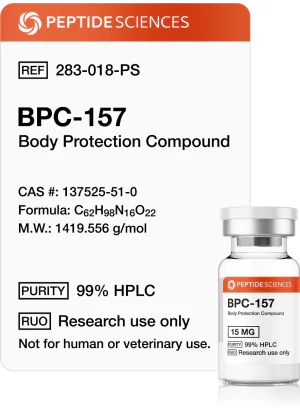
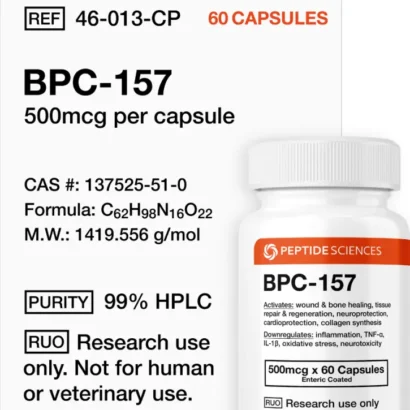
Molecular Formula C₆₂H₉₈N₁₆O₂₂
Molecular Weight ~1419.56 g/mol
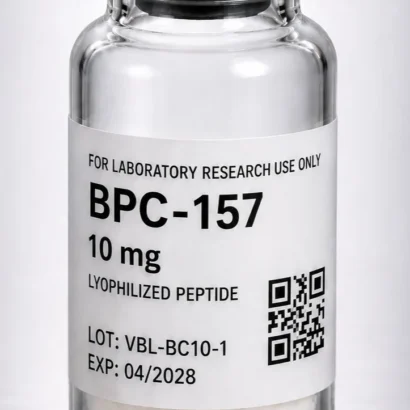
Appearance White to off-white lyophilized powder
Solubility Freely soluble in water and aqueous buffers
Sequence Gly-Glu-Pro-Pro-Pro-Gly-Lys-Pro-Ala-Asp-Asp-Ala-Gly-Leu-Val
The BPC 157 Peptide contains a high proportion of proline residues (four in total), which contributes to its relative resistance to enzymatic degradation and its distinctive conformational properties.
2.2 Salt Forms
BPC-157 is commonly produced and supplied as either the free base or the acetate salt. The acetate salt form is widely used in research settings due to its improved solubility and stability under neutral physiological conditions. Alternative salt forms, including sodium (NaBPC157) and TRIS (TRIS-BPC157) salts, have been described in the patent literature, with varying stability profiles.
The free base form of BPC-157 is noted by regulatory agencies to be extremely sensitive to product formulation, process, and environmental conditions, including pH, temperature, concentration, and the presence of in-process impurities or excipients. These sensitivities must be carefully managed during manufacturing to prevent aggregation and degradation.
The primary method for producing BPC 157 Peptide is Fmoc-based Solid-Phase Peptide Synthesis (SPPS), a well-established and highly reproducible technique for the chemical synthesis of peptides.
3.1 Synthesis Strategy
The synthesis of BPC-157 proceeds via stepwise condensation of Fmoc-protected amino acids onto a solid polymeric support (resin). The general workflow is as follows:
1. Resin Preparation: The synthesis begins with a preloaded resin, typically a Wang resin or a SASRIN™ resin, to which the C-terminal amino acid (Valine) is already attached. Alternative resins, such as HYCRAM™ and benzhydrilaminoresin, have also been described in the original synthesis protocols.
2. Fmoc Deprotection: The Fmoc protecting group on the N-terminus of the resin-bound amino acid is removed using a solution of piperidine in DMF (typically 20% v/v). This step is repeated to ensure complete deprotection.
3. Coupling: The next Fmoc-protected amino acid is activated and coupled to the growing peptide chain. Common coupling reagents include diisopropylcarbodiimide (DIC) and HBTU/HOBt. The coupling efficiency is monitored, and double-coupling may be employed to ensure complete chain elongation.
4. Repetition: Steps 2 and 3 are repeated iteratively until the full 15-amino acid sequence is assembled.
5. Cleavage: The completed peptide is cleaved from the resin and simultaneously deprotected using a cleavage cocktail. A commonly used mixture is trifluoroacetic acid (TFA) / trifluoromethanesulphonic acid / anisole in a ratio of approximately 2:17:52. The cleavage reaction is typically performed at room temperature for 1–2 hours.
6. Precipitation: The cleaved peptide is precipitated in cold diethyl ether and collected by filtration or centrifugation.
3.2 Purification
The crude peptide mixture obtained after cleavage is purified by Reverse-Phase High-Performance Liquid Chromatography (RP-HPLC). The purification gradient is typically optimized using a C18 or C8 column with a water/acetonitrile mobile phase containing 0.1% TFA. The final purified product is usually obtained at >95% purity, though optimized protocols can achieve >99% purity.
3.3 Process Impurities and Quality Control
Solid-phase peptide synthesis inherently generates several types of impurities that must be controlled:
· Peptide-related impurities: These include truncated sequences, deletion peptides, and isomers resulting from incomplete coupling or side reactions. These impurities are structurally similar to the target peptide and can be difficult to separate.
· Process-related impurities: Residual solvents, coupling reagents, activators, catalysts, and scavengers from the synthesis and cleavage steps may be present in the final product.
· Aggregates: BPC-157 is susceptible to aggregation under stress conditions. Size exclusion chromatography (SEC) or field flow fractionation (FFF) may be required to detect and quantify aggregates.
A comprehensive Certificate of Analysis (CoA) for BPC-157 should include:
· Purity by RP-HPLC (typically >95%)
· Mass confirmation by ESI-MS or MALDI-TOF
· Amino acid analysis
· Residual solvent testing (e.g., by GC)
· Water content (Karl Fischer)
· Appearance and solubility
It is important to note that many commercially available CoAs for BPC 157 Peptide only report purity by HPLC, without comprehensive impurity profiling. Researchers should request full analytical documentation from suppliers.
The precise molecular mechanisms underlying BPC-157’s biological activities have been the subject of extensive investigation. Current evidence supports a multi-target, pleiotropic mechanism involving several interconnected pathways.
4.1 Angiogenesis and Vascular Repair
A key mechanism recently elucidated involves the BPC157-FBXO22-BACH1 axis. Intracellular BPC 157 Peptide interacts with the E3 ubiquitin ligase adaptor protein FBXO22 through its proline residue at position 3. This interaction leads to the stabilization of the transcription factor BACH1 by suppressing its ubiquitination and proteasomal degradation. The accumulation of BACH1 enhances the proliferation and tube-forming capacity of vascular endothelial cells, thereby promoting angiogenesis and vascular regeneration.
4.2 Nitric Oxide (NO) System Modulation
BPC 157 Peptide has been consistently shown to modulate the nitric oxide system. It counteracts disturbances related to NO synthesis and signaling, including both over-activity and depletion of NO. This modulation is believed to be central to its cytoprotective effects in the gastrointestinal tract and cardiovascular system.
4.3 Growth Factor and Receptor Interactions
BPC 157 Peptide has been reported to upregulate growth factor expression and enhance growth hormone receptor expression, particularly in tendon fibroblasts. This effect is thought to contribute to its pro-healing and regenerative activities.
4.4 Neurotransmitter System Interactions
Research suggests that BPC-157 interacts with multiple neurotransmitter systems, including dopaminergic, serotonergic, glutamatergic, GABAergic, adrenergic, and cholinergic pathways. It appears to counteract disturbances related to receptor blockade, over-activity, depletion, and sensitization. These interactions may underlie its reported neuroprotective and analgesic effects.
4.5 Anti-Inflammatory Activity
BPC 157 Peptide exhibits anti-inflammatory properties across various preclinical models. It has been shown to decrease myeloperoxidase (MPO) activity, reduce inflammatory cell influx, and lower levels of pro-inflammatory cytokines.
The stability of BPC 157 Peptide is influenced by several factors, including temperature, pH, light exposure, and the physical state of the product (lyophilized vs. reconstituted).
5.1 Lyophilized Powder
Lyophilized BPC 157 Peptide is relatively stable when stored under appropriate conditions:
· Long-term storage: -20°C or below, protected from light and moisture. Under these conditions, the product can remain stable for several years.
· Short-term storage: Stable at room temperature for up to 3 weeks, making it suitable for shipping.
5.2 Reconstituted Solution
Once reconstituted, BPC 157 Peptide is more susceptible to degradation:
· Storage temperature: 2–8°C (refrigerated).
· Shelf life: Typically stable for 2–4 weeks when stored refrigerated.
· Freeze-thaw: Repeated freeze-thaw cycles should be avoided, as they can lead to peptide aggregation and loss of activity. Aliquoting into single-use vials is recommended.
5.3 pH Stability
BPC 157 Peptide is most stable in a slightly acidic to neutral pH range (approximately 6.5–8.5). Extreme pH conditions can lead to hydrolysis of peptide bonds. The peptide is notably resistant to gastric acid and pepsin (pH 1–2), which is consistent with its origin as a gastric juice peptide.
5.4 Reconstitution Best Practices
To ensure optimal stability:
· Allow the lyophilized vial to reach room temperature before opening to prevent condensation.
· Use sterile bacteriostatic water or sterile saline as the reconstitution solvent.
· Inject the solvent slowly down the side of the vial; avoid direct forceful injection onto the powder.
· Gently swirl to dissolve; do not shake or vortex, as this can cause aggregation.
The vast majority of BPC 157 Peptide research has been conducted in preclinical (animal and in vitro) models. A 2025 systematic review identified 35 animal or laboratory studies and only one clinical study, highlighting the predominantly preclinical nature of the evidence base.
6.1 Musculoskeletal Repair
BPC 157 Peptide has demonstrated consistent pro-healing effects in models of:
· Tendon injury: Accelerated healing of transected Achilles tendon in rats, with stimulation of tendon fibroblast outgrowth, survival, and migration.
· Muscle injury: A Phase 2 clinical trial (NCT07437547) is currently evaluating BPC 157 Peptide for acute grade II hamstring strain repair.
· Ligament and bone healing: Improved functional recovery in Achilles tendon-to-bone healing models, with combined anti-inflammatory and pro-angiogenic effects.
6.2 Gastrointestinal Protection
As a gastric juice-derived peptide, BPC 157 Peptide has been extensively studied for its cytoprotective effects in the gastrointestinal tract. It has been shown to prevent and reverse lesions induced by various challenges, including NSAIDs, alcohol, and stress.
6.3 Cardiovascular and Organ Protection
Preclinical studies have explored BPC-157’s effects in:
· Myocardial infarction and heart failure
· Pulmonary hypertension
· Arrhythmias and thrombosis
· Tracheocutaneous fistula repair.
6.4 Neurological and Neuroprotective Effects
BPC 157 Peptide has demonstrated neuroprotective properties in models of encephalopathy, traumatic brain injury, and peripheral nerve injury, potentially through its interactions with dopaminergic and serotonergic systems.
6.5 Limitations of Preclinical Evidence
While the preclinical literature is extensive and generally positive, several limitations must be acknowledged:
· Most studies use small sample sizes.
· Dosing regimens vary widely across studies.
· The majority of studies have been conducted by a limited number of research groups.
· There is a lack of independent replication.
· The clinical relevance of animal model findings remains uncertain.
Musculoskeletal Healing Studies
Extensive validation demonstrates remarkable improvements in tendon, ligament, and muscle repair with enhanced functional outcomes, including increased motor function, decreased joint contracture, and preserved locomotion patterns. Research shows BPC 157 Peptide increases growth hormone receptor expression in fibroblast cells, concentrating growth factor benefits precisely where needed most. Studies reveal faster healing rates, superior tissue remodeling, and increased biomechanical strength compared to controls, positioning it as a breakthrough tool for investigating soft tissue repair mechanisms.
Wound Healing & Tissue Regeneration Research
Clinical validation demonstrates accelerated wound closure rates exceeding 60% compared to controls across multiple injury models, including chemical burns, surgical wounds, and chronic ulcers. Research shows enhanced granulation tissue formation, improved re-epithelialization, increased collagen deposition, and superior dermal remodeling through VEGF pathway activation. Applications include investigating diabetic wound healing, fistula repair (healing time reduced from 2.5 years to under one month), and burn injury recovery mechanisms.
Research reveals comprehensive cardiac protection, including prevention of heart failure, normalization of elevated endothelin levels, and reduced long-term effects following myocardial infarction. Studies demonstrate BPC 157 Peptide’s ability to counteract various arrhythmias, activate collateral circulation pathways, and protect against multi-organ failure. Applications encompass investigating cardiac repair mechanisms, ischemia-reperfusion injury prevention, and heart muscle regeneration pathways.
Gastrointestinal Research Applications
As the natural source tissue for BPC 157 Peptide, gastrointestinal healing represents core research applications, including ulcer healing, inflammatory bowel disease treatment, and mucosal protection mechanisms. Studies demonstrate enhanced vascular health in the GI tract, improved healing of colo-cutaneous fistulas, and resolution of direct stomach perforations. Research reveals a critical role of angiogenesis in GI healing previously not understood, making BPC-157 valuable for investigating gut-brain axis communication.
Neurological Enhancement Studies
Comprehensive research demonstrates neuroprotective effects, including reduced stroke damage, improved memory and coordination, and enhanced nerve regeneration through nitric oxide system upregulation. Studies show protection against glaucoma with restored intraocular pressure, recovered pupil function, and maintained retinal integrity. Applications include investigating stroke recovery mechanisms, neurodegenerative disease prevention, and ocular health optimization.
7.1 Human Pharm
Human pharmacokinetic data for BPC 157 Peptide are extremely limited. A two-subject pilot study by Lee and Burgess reported a plasma half-life of less than 30 minutes following intravenous administration. No human pharmacokinetic data are available for oral, subcutaneous, nasal, or transdermal administration routes.
Preclinical data indicate:
· Intramuscular bioavailability: 14–51% (species-dependent).
· Metabolism: BPC 157 Peptide is metabolized into shorter peptide fragments in vivo.
· Excretion: Urinary and biliary routes.
7.2 Clinical Safety Data
The FDA has identified five clinical studies involving BPC 157 Peptide. Administration routes and doses have included:
· Up to 2 mg/kg rectal enema once daily for 8 days (n=24 healthy subjects).
· 80 mg rectal enema once daily for 2 weeks (approximately 26 subjects with ulcerative colitis).
· 2–4 mg intra-articular injection (1–2 doses, n=17 subjects with knee conditions).
A 2025 pilot study of intravenous BPC 157 Peptide infusion in two healthy adults reported that doses up to 20 mg were well-tolerated with no adverse effects.
7.3 Reported Adverse Events
The FDA Adverse Event Reporting System (FAERS) contains three reports associated with injectable BPC-157 through December 2025:
1. Injection site reaction: A 55-year-old woman reported redness and swelling around the injection site; however, she was also using compounded thymosin.
2. Shortness of breath: A 28-year-old male developed shortness of breath requiring an emergency room visit. Limited information prevents assessment of causality.
3. Hyperpigmentation and gingival darkening: A 40-year-old female using a product containing both BPC-157 and TB-500 developed diffuse hyperpigmentation and gingival darkening, which reproduced upon rechallenge. The multi-peptide nature of the product complicates attribution.
The FDA has concluded that there is insufficient clinical safety information to fully characterize the safety profile of BPC-157.
8.1 United States (FDA)
BPC 157 Peptide is FDA-approved for any indication. It is classified as an unapproved drug. Historically, BPC-157 was placed on the FDA’s Category 2 bulk drug substances list, which identifies substances that raise significant safety concerns and are prohibited for use in compounding under Sections 503A and 503B of the Federal Food, Drug, and Cosmetic Act.
In July 2026, the FDA’s Pharmacy Compounding Advisory Committee (PCAC) voted 8–6 in favor of recommending the inclusion of BPC-157-related bulk drug substances on the 503A Bulks List. However, as of the time of writing, this vote does not alter the current legal status of BPC-157—it still cannot be lawfully compounded, and FDA enforcement discretion remains in effect.
8.2 World Anti-Doping Agency (WADA)
BPC 157 Peptide is prohibited by WADA under Category S0 (Approved Substances). Athletes subject to anti-doping regulations are prohibited from using BPC-157.
8.3 Other Jurisdictions
Regulatory authorities in Australia (TGA), New Zealand (Medsafe), and Hong Kong have issued consumer advisories warning against the use of unapproved peptide products, including BPC-157, citing risks of liver damage, severe allergic reactions, and other health complications.
A robust quality control program for BPC 157 Peptide production should include:
Test Method Specification
Identity ESI-MS or MALDI-TOF Conforms to theoretical mass
Purity RP-HPLC ≥95% (≥99% for high-purity grades)
Peptide Content Amino acid analysis or UV ≥70% (typically)
Water Content Karl Fischer ≤5%
Residual Solvents GC Meets ICH Q3C limits
Aggregation SEC or FFF Report as % monomer
Counter-ion Ion chromatography Report acetate or TFA content
Appearance Visual White to off-white powder
Storage & Administration
Store capsules at room temperature in a sealed bottle. Protect from moisture and excessive heat. Capsules maintain stability for 24 months when stored properly. Each capsule contains a precisely measured 500mcg dose, enabling consistent research protocols. High oral bioavailability eliminates the need for complex injection procedures while maintaining therapeutic efficacy.
Research Use Only: Not for human or veterinary therapeutic applications. Handle according to laboratory safety protocols and institutional research guidelines. Peptice Science
Production Description: BPC 157 Peptide (Body Protection Compound-157)
Document Type: Technical & Research Reference Monograph
Target Audience: Research scientists, pharmaceutical development professionals, compounding pharmacists, and regulatory affairs specialists.
Status: Research Chemical – Not for Human or Veterinary Use.
BPC 157 Peptide is a synthetic pentadecapeptide with a rich preclinical research history and a diverse profile of reported biological activities. Its production via Fmoc-based SPPS is well-established, though careful control of synthesis parameters, purification, and formulation is essential to ensure product quality and stability.
While preclinical evidence suggests potential benefits in tissue repair, angiogenesis, and cytoprotection, the clinical evidence base remains extremely limited. Human pharmacokinetic data are minimal, and no large-scale, randomized controlled trials have been completed. Regulatory agencies worldwide have not approved BPC-157 for therapeutic use, and it is prohibited in sport.
Researchers and manufacturers working with BPC 157 Peptide must adhere to strict quality control standards, ensure full analytical characterization of their products, and remain compliant with applicable regulatory requirements. The peptide’s future as a therapeutic agent will depend on the successful completion of rigorous clinical trials to establish its safety, efficacy, and optimal dosing in human populations.
| Choose | Injection Vials, Capsules |
|---|---|
| Dosage | 250 mcg Capsules, 500 mcg Capsules, 1000 mcg Capsules, 10mg Vial, 20mg Vial |
| Quantity | 1, 2, 5 |