
Currently Empty: £0.00

Peptide Science Forster: How a 1948 Insight Became the Backbone of Modern Peptide Science
In 1948, a German scientist named Theodor Förster proposed a deceptively simple idea: that energy could be transferred non-radiatively between two molecules over distances of 1 to 10 nanometres, provided their emission and absorption spectra overlapped. What Förster didn’t know was that his insight would become one of the most important tools in peptide science—and a foundational technology for understanding how these tiny molecules actually work.
The FRET Revolution
Förster Resonance Energy Transfer (FRET) is now a cornerstone technique in peptide and protein research. At its core, FRET is a “molecular ruler”. By attaching fluorescent tags—a donor and an acceptor—to different parts of a peptide or protein, scientists can measure the distance between them with nanometre precision. When the donor and acceptor are close enough, energy jumps between them. When they’re far apart, it doesn’t.
This distance sensitivity makes FRET uniquely powerful. Peptide Science Forster are constantly folding, binding, and changing shape. FRET allows researchers to watch these conformational changes in real time—essentially creating a live, molecular-level movie of peptides at work.
The technique has become so central that entire subfields depend on it. Peptide-mediated membrane fusion, for example, is frequently studied using FRET-based assays. Researchers create liposomes equipped with fusogenic peptides and fluorescent lipids. When fusion occurs and lipids mix, the FRET signal changes—providing a direct readout of the process. FRET peptide substrates are also used to detect and monitor disease-related proteinase activity, and triple-helical peptide FRET probes monitor collagen breakdown.
FRET’s Place in Australian Peptide Science
Peptide Science Forster Australia is home to one of the world’s leading peptide research institutions: the ARC Centre of Excellence for Innovations in Peptide and Protein Science (CIPPS). With more than 600 antimicrobial peptides already discovered, CIPPS researchers are using machine learning for structure-function prediction. Their work spans three flagship programs: unlocking the peptide universe of Australia’s unique flora and fauna, programming peptides for bioavailability and localisation, and developing biosynthetic technologies for peptide engineering.
This isn’t abstract science. University of Queensland researchers are developing plants containing therapeutic peptides that could relieve pain, reduce cholesterol, or suppress appetite—supported by a $1.2 million ARC grant. Professor David Craik’s pioneering work on peptide cyclisation has profoundly influenced modern peptide science. And Professor Lara Malins at ANU is advancing peptide-drug conjugates as promising therapeutic modalities.
The Commercial Boom and the Regulatory Crackdown
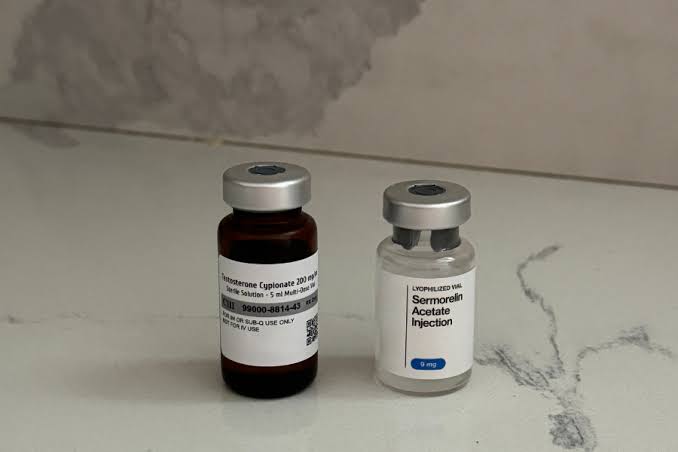
Australian peptide therapeutics generated US$1.625 billion in revenue in 2024, with projections of US$3.33 billion by 2030. But alongside legitimate science and commerce, a parallel market has exploded. Unapproved peptides like BPC-157, TB-500, and GHK-Cu are being marketed online for cosmetic and anti-aging purposes without TGA approval.
The consequences are alarming. In 2026, six cases of acute liver toxicity were reported in Victoria, all linked to an unapproved peptide product. Testing of a popular unapproved weight loss peptide revealed double the concentration listed on the label—prompting warnings of “enormous” overdose risks. The TGA has now made unapproved peptides a compliance priority, alongside weight loss medications, vapes, and sunscreens.
Australia’s health leaders have jointly expressed concern about the growing availability, promotion, and use of unapproved peptide products. These products have not been evaluated for safety, quality, or effectiveness. Recent seizures by the TGA, Australian Border Force, and Victoria Police netted peptides and illicit steroids with an estimated street value exceeding $2 million.
The Tool and the Challenge
FRET is a tool for understanding how peptides work. It reveals structure, conformation, and function with extraordinary precision. But the same molecular insights that drive legitimate drug development are also fuelling a wellness boom that increasingly operates outside regulatory oversight.
The irony is that FRET—a technique developed to understand peptides at the molecular level—is itself a reminder of what’s at stake. Peptide Science Forster are not simple supplements. They are potent biological signalling molecules. Whether they heal or harm depends not just on the molecule itself, but on dosage, purity, delivery, and the specific biological context into which they’re introduced.
The Future
The 16th Australian Peptide Conference was held in Launceston in 2025. The Tregear Award for Outstanding Achievements in Peptide Science was awarded to Associate Professor Christoph Nitsche. Australian researchers continue to push the boundaries of what peptides can do—from antimicrobials to cancer therapies to next-generation functional foods.
But the gap between laboratory science and consumer wellness has never been wider. FRET can measure distances of 1 to 10 nanometres. It cannot measure the distance between what’s known about a peptide and what’s being claimed about it online. That gap is the central challenge facing peptide science today—and it’s one that no amount of molecular precision can solve alone.

