Currently Empty: £0.00

Call Us:
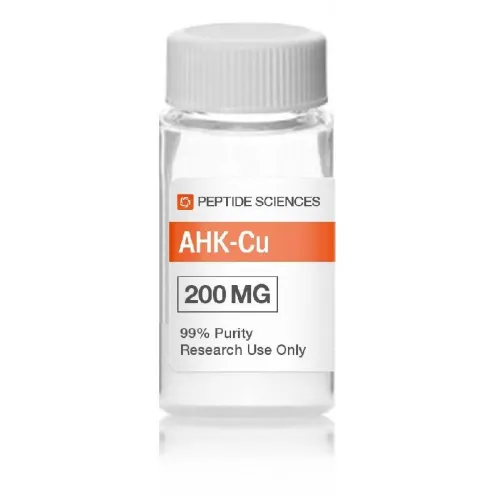
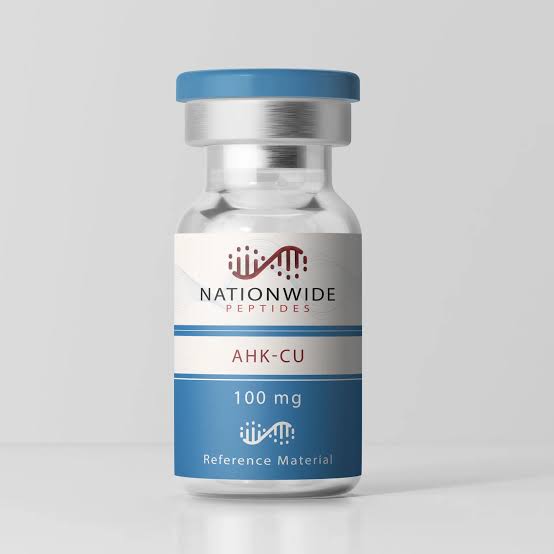


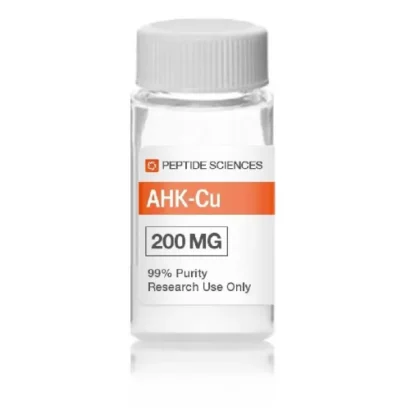
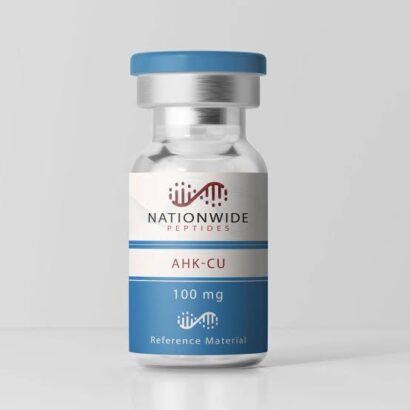
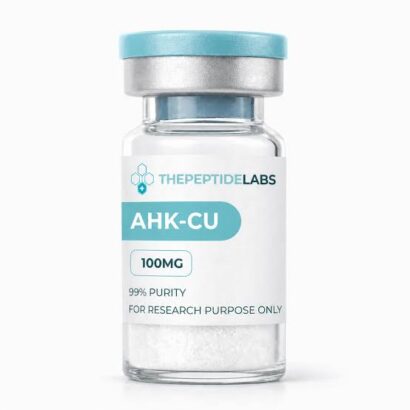
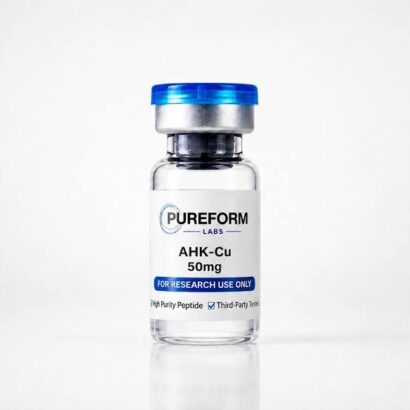
AHK-Cu represents a sophisticated example of peptide engineering—a copper tripeptide complex that leverages the power of bioavailable copper to support both hair and skin health through distinct but complementary mechanisms. Its ability to stimulate dermal papilla cell proliferation, modulate growth factor signaling, promote collagen synthesis, and support tissue regeneration positions it as a valuable ingredient in modern cosmetic formulations.
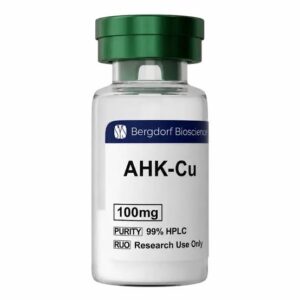
Price range: £80.00 through £270.00
In the expanding universe of peptide-based cosmetics, AHK-Cu—known formally as Copper Tripeptide-3 or L-alanyl-L-histidyl-L-lysine:copper(II)—represents a fascinating example of how subtle molecular engineering can produce targeted biological effects. A close structural relative of the better-known GHK-Cu, AHK-Cu differs by a single amino acid substitution: alanine replaces glycine at the first position of the tripeptide sequence.

This seemingly minor change—the addition of a single methyl group—alters the peptide’s three-dimensional conformation and produces notably different biological activities, with AHK-Cu demonstrating enhanced specificity for hair follicle stimulation compared to its parent compound. The result is a versatile bioactive peptide that has garnered significant attention for its dual capacity to support both hair growth and skin rejuvenation.
AHK-Cu is a synthetic copper tripeptide complex consisting of three amino acids—alanine, histidine, and lysine—bound to a copper(II) ion. Its molecular formula is C₁₅H₂₄CuN₆O₄, with a molecular weight of approximately 415.93 to 417.96 g/mol. The compound is listed under the INCI (International Nomenclature of Cosmetic Ingredients) name Copper Tripeptide-3 and is also known by synonyms including AHK Copper and Ala-His-Lys-Cu. It typically appears as a light blue to blue solid powder with a purity often exceeding 95%.
For optimal stability, AHK-Cu should be stored at -20°C in powder form, away from moisture. It demonstrates good solubility in water and DMSO, making it suitable for incorporation into a wide variety of cosmetic formulations including serums, creams, shampoos, conditioners, and scalp treatments. Its biomimetic structure allows for easy integration into skincare products while maintaining stability under standard cosmetic processing conditions.
AHK-Cu exerts its biological effects through multiple interconnected mechanisms centered on cellular signaling and tissue regeneration. The peptide functions as a growth factor that increases dermal fibroblast proliferation while simultaneously modulating key signaling molecules. Specifically, it promotes the production of vascular endothelial growth factor (VEGF) while decreasing the secretion of transforming growth factor-beta1 (TGF-β1) by dermal fibroblasts—a dual effect with significant implications for conditions like androgenetic alopecia, where elevated TGF-β1 drives follicle miniaturization.
At the cellular level, AHK-Cu delivers bioavailable copper ions to target tissues, supporting enzymatic processes essential for collagen and elastin synthesis. The peptide sequence facilitates cellular communication, modulating fibroblast activity and promoting balanced matrix protein turnover. This mechanism contributes to the maintenance of skin structure and resilience.
In the context of hair biology, AHK-Cu stimulates the proliferation of dermal papilla cells (DPCs)—the specialized mesenchymal cells that play a central role in hair follicle cycling and growth. Research has demonstrated that AHK-Cu is effective at remarkably low concentrations ranging from 10⁻¹² to 10⁻⁹ M (picomolar to nanomolar), highlighting its potent bioactivity.
The peptide also reduces apoptosis (programmed cell death) in dermal papilla cells, with one study showing a 3.48% reduction in apoptotic cells following treatment. This anti-apoptotic effect is mediated through modulation of the Bcl-2/Bax ratio and downregulation of cleaved caspase-3 and PARP levels.
AHK-Cu has emerged as a particularly promising ingredient for hair growth and scalp health applications. The foundational 2007 study by Pyo and colleagues from Seoul National University College of Medicine demonstrated that AHK-Cu stimulates the elongation of isolated human hair follicles and promotes the proliferation of dermal papilla cells. The peptide achieves this by balancing the hair life cycle—promoting proliferation of hair papilla cells while reducing apoptosis, thereby supporting follicle elongation and improved hair quality.
Beyond follicle stimulation, AHK-Cu improves scalp conditions by strengthening hair follicles and enhancing scalp circulation. Its ability to modulate the growth factor environment—increasing VEGF while decreasing TGF-β1—creates a more favorable milieu for hair growth, particularly relevant for individuals experiencing thinning hair or androgenetic alopecia.
While AHK-Cu is often highlighted for its hair growth properties, it also offers significant benefits for skin health and rejuvenation. The peptide promotes collagen production, enhances skin healing, and provides anti-inflammatory benefits. It significantly improves skin elasticity and reduces the appearance of fine lines and wrinkles, contributing to overall skin rejuvenation.
In vitro studies have demonstrated that AHK-Cu increases the growth and viability of dermal fibroblasts while stimulating collagen production. One study reported that treatment with Copper Tripeptide-3 stimulated the formation of collagen type I by 300% compared to the control group. This collagen-stimulating effect, combined with the peptide’s ability to support extracellular matrix maintenance, makes it a valuable ingredient for anti-aging formulations designed to firm, tighten, and restore skin density.
The peptide also supports wound healing and overall skin regeneration. By delivering bioavailable copper ions to damaged tissue, it supports the skin’s natural repair processes and improves skin elasticity. Copper itself is known to have many beneficial biological applications, including stimulating collagen, elastin, and glycosaminoglycan production—all essential components of healthy, resilient skin.

AHK-Cu is suitable for incorporation into a diverse range of personal care products. In skincare, it can be added to serums designed for daily facial care routines, lightweight emulsions and moisturizers, leave-on masks and overnight treatments, eye contour creams and gels, and post-cleansing toners or essences. For hair care applications, it is commonly formulated into shampoos, conditioners, and targeted scalp treatments.
Typical concentrations in cosmetic formulations range from 0.05% to 1%. For optimal results, AHK-Cu can be paired with other peptides, hyaluronic acid, and antioxidant serums to enhance its efficacy in rejuvenating the skin and improving elasticity. It is often recommended for use during evening skincare routines, allowing the peptide to work in tandem with the skin’s natural repair processes that occur overnight.
AHK Cu is generally well tolerated, with side effects usually limited to mild scalp or skin irritation. Because it is a topical peptide that mostly remains localized, the risk of systemic effects is low at cosmetic concentrations. Possible reactions include mild redness, itching, or irritation, and rarely an allergic response.
The risk of copper toxicity is low but should be respected, particularly when considering application on broken skin. Systemic toxicity is extremely unlikely as skin absorption is rate-limited. AHK-Cu is listed as a cosmetic ingredient by the FDA but is not approved as a drug.
While human clinical evidence specifically for AHK-Cu remains more limited than for its better-studied relative GHK-Cu, the preclinical and in vitro data are compelling. For formulators and consumers seeking targeted, science-backed solutions for hair growth and skin rejuvenation, AHK-Cu offers a promising and well-tolerated option in the evolving landscape of peptide-based personal care.
| Dosage | 50mg, 100mg, 200mg, 1gram, 5grams |
|---|