Currently Empty: £0.00

Call Us:


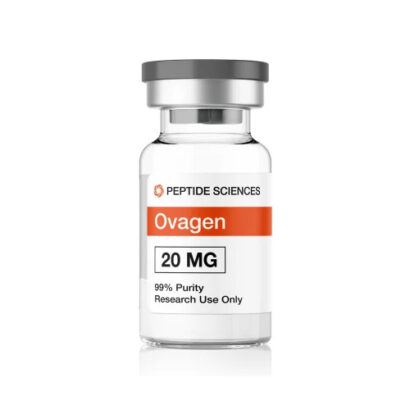
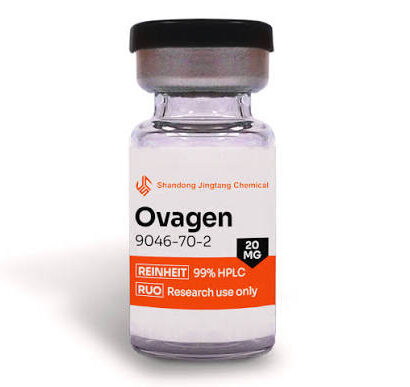
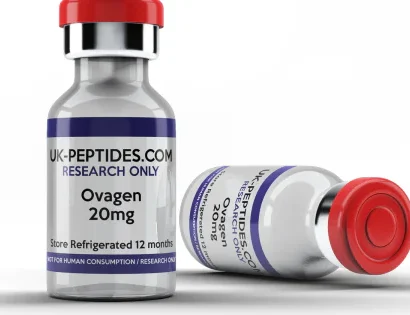
Ovagen Bioregulator is a synthetic tetrapeptide bioregulator specifically designed to target the female reproductive system, with the amino acid sequence Alanine-Glutamic Acid-Aspartic Acid-Arginine (Ala-Glu-Asp-Arg, abbreviated AEDR) . It has a molecular formula of C₁₉H₃₁N₇O₉ and a molecular weight of approximately 489.48 g/mol.
Price range: £45.00 through £280.00
Ovagen Bioregulator is a synthetic tetrapeptide bioregulator specifically designed to target the female reproductive system, with the amino acid sequence Alanine-Glutamic Acid-Aspartic Acid-Arginine (Ala-Glu-Asp-Arg, abbreviated AEDR) . It has a molecular formula of C₁₉H₃₁N₇O₉ and a molecular weight of approximately 489.48 g/mol.
Within this framework, Ovagen is specifically designated as the ovarian bioregulator, designed to support ovarian function, follicular health, hormonal balance, and the regulation of the reproductive cycle. It serves as the female counterpart to Testagen, which targets testicular tissue in males. The peptide is derived from the natural ovarian cytamine (sold as Ovägen in Russia) and is part of a comprehensive system of bioregulators intended for the prevention and correction of age-related changes in reproductive tissues.
Ovagen is a tetrapeptide composed of four amino acids: alanine (hydrophobic), glutamic acid (negatively charged), aspartic acid (negatively charged), and arginine (positively charged) . This specific combination of residues creates a unique charge distribution and three-dimensional conformation that influences how the peptide interacts with ovarian cell chromatin.
The sequence AEDR distinguishes Ovagen from other Khavinson peptides:
· Epitalon (AEDG) targets the pineal gland
· Chonluten (AEDL) targets lung tissue
· Ovagen (AEDR) targets ovarian tissue
This observation supports the Khavinson group’s hypothesis that the C-terminal amino acid residue largely determines tissue specificity, while the shared N-terminal core provides common epigenetic regulatory activity.
With a molecular weight of approximately 489 Da, Ovagen falls within the small peptide range, allowing it to penetrate cellular and nuclear membranes efficiently . This small size enables the peptide to bypass conventional cell-surface receptor signaling pathways and gain direct access to the genetic material within target cells.
The peptide is typically supplied as a white lyophilized (freeze-dried) powder with a purity of ≥98% (HPLC). It is soluble in water and should be stored desiccated at –20°C, protected from light, to maintain stability.
Epigenetic Regulation of Ovarian Gene Expression
Ovagen is proposed to act through the general mechanism established for the Khavinson family of peptide bioregulators: selective interaction with DNA and chromatin structures in target tissue cells, leading to the modulation of gene expression. The peptide is thought to bind to complementary DNA sequences in ovarian cell chromatin, influencing the transcription of genes involved in folliculogenesis, steroidogenesis, and cellular proliferation.
Chromatin Decondensation
The primary characterized mechanism is the effect on chromatin structure—particularly in cells from aging individuals. In studies examining related bioregulators, treatment with tissue-specific peptides induced:
· Activation of ribosomal genes
· Decondensation of densely packed chromatin fibrils
· Release of genes repressed by age-specific condensation of euchromatic regions
For Ovagen, this is interpreted as evidence that AEDR can “switch on” age-suppressed gene-expression states in ovarian cells, promoting a relaxation of chromatin structure from a condensed 30-nanometer fiber to a more relaxed 10-nanometer filament.
By modulating gene expression in ovarian granulosa cells and theca cells, Ovagen may influence:
· Sensitivity to gonadotropins (FSH and LH)—enhancing the ovarian response to pituitary signals
· Estrogen and progesterone biosynthesis—regulating the expression of steroidogenic enzymes such as aromatase and 3β-HSD
· Follicular recruitment and maturation—supporting the processes of folliculogenesis
· Oocyte quality—potentially through epigenetic regulation of genes important for oocyte maturation and developmental competence
Anti-Aging and Geroprotective Effects
The ovarian aging process is characterized by a progressive decline in follicle numbers, increased cellular senescence, and altered gene expression patterns. By promoting chromatin decondensation in ovarian cells, Ovagen may:
· Reduce markers of cellular senescence (such as p16 and p21)
· Attenuate the senescence-associated secretory phenotype (SASP) in ovarian stroma
· Support the maintenance of the ovarian reserve
While specific dedicated human clinical trials for Ovagen are limited in Western databases, the peptide has been studied within the broader framework of Khavinson’s bioregulator research:
· Stimulation of Ovarian Tissue Function: Preclinical studies suggest that ovarian peptide bioregulators can normalize the structural and functional parameters of ovarian tissue in aging animal models.
· Endocrine Modulation: Research has examined the effects of ovarian peptide preparations on the levels of estradiol, progesterone, and gonadotropins in models of perimenopause.
· Folliculogenesis: Observations indicate potential effects on the balance between follicular atresia and maturation, which is central to ovarian aging.
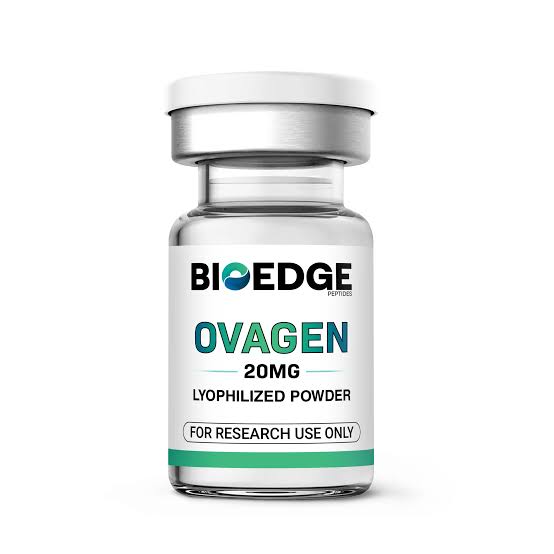
· Research Compound Only: Ovagen is not approved for therapeutic use and is intended exclusively for research and industrial applications
· Preclinical Evidence: Most available evidence comes from preclinical studies within the Khavinson network
· Female Reproductive Health: While targeting female health, the peptide is not a hormone replacement therapy and should not be considered as such
· Contraindications: Pregnant or breastfeeding individuals should avoid use, as sufficient safety evidence is not available
It represents a fundamentally different approach to female reproductive health—not through exogenous hormone administration, but through epigenetic regulation at the cellular level.
Rather than merely treating the symptoms of ovarian aging, Ovagen addresses the cellular and molecular underpinnings of ovarian function. By targeting chromatin structure and modulating gene expression, this tetrapeptide bioregulator offers a regenerative approach to understanding ovarian biology, fertility, and age-related reproductive changes.
| Dosage | 10mg Vial, 20mg Vial, 20mg Oral Capsules |
|---|---|
| Quantity | 1 Vial, 2 Vials, 5 Vials, 60 Pills |