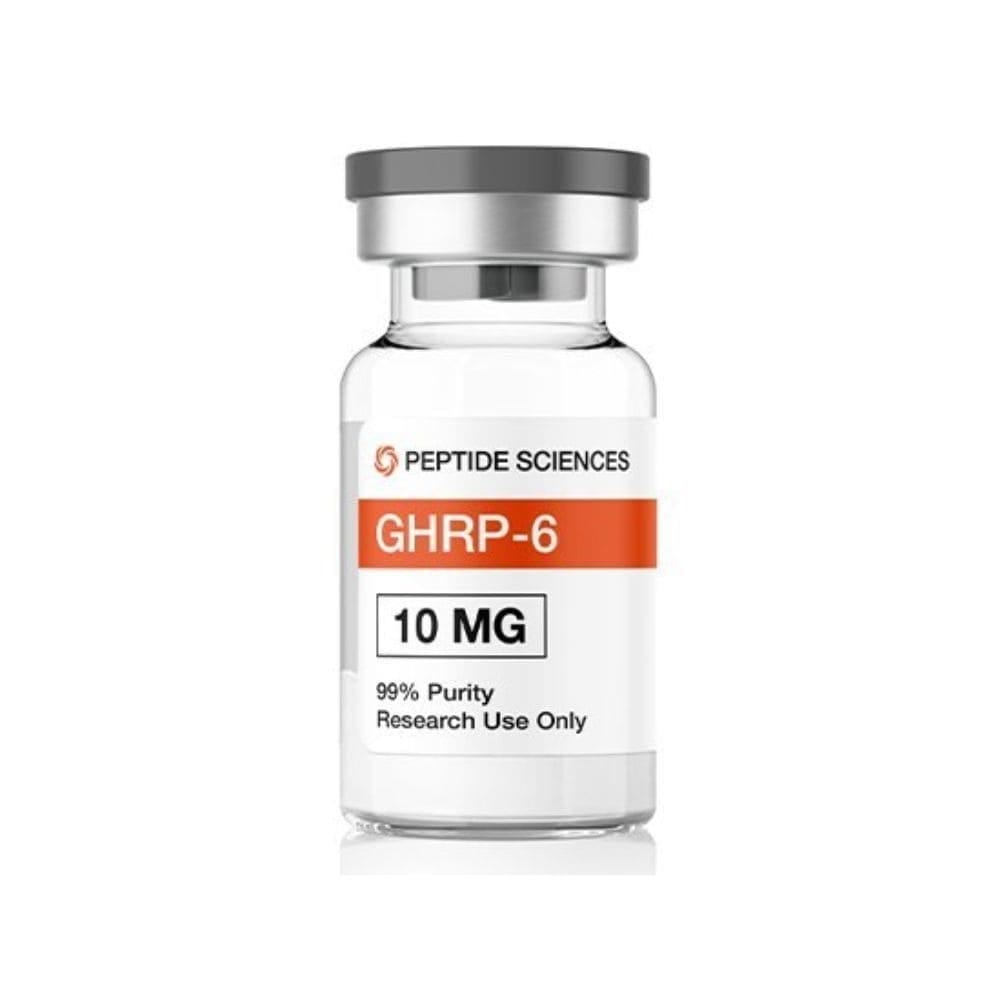

GHRP-6 For Sale
GHRP-6 occupies a unique position in the history of endocrinology and peptide pharmacology. As the first synthetic peptide demonstrated to release GH through a mechanism distinct from GHRH, its discovery fundamentally altered our understanding of growth hormone regulation and ultimately led to the identification of the ghrelin system.
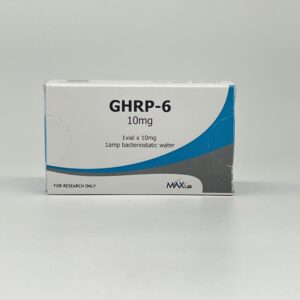
Where To Buy GHRP 6 UK
Growth Hormone-Releasing Peptide-6 (GHRP-6) is a synthetic hexapeptide that belongs to the growth hormone secretagogue family of compounds. First synthesized in the early 1980s, GHRP-6 represents the prototypical member of the growth hormone-releasing peptide (GHRP) class and has served as the foundation for the development of subsequent analogues including GHRP-2, hexarelin, and ipamorelin.
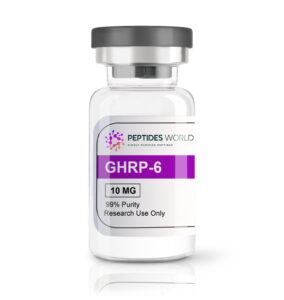
This comprehensive review examines from multiple perspectives, including its chemical structure, discovery, mechanism of action, pharmacokinetic properties, clinical research applications, safety profile, and regulatory status. Despite decades of research and demonstrated efficacy in stimulating endogenous growth hormone secretion through the ghrelin receptor pathway, It remains an investigational compound not approved for any therapeutic indication by major regulatory agencies worldwide.
1. Introduction
The regulation of growth hormone (GH) secretion represents one of the most intricate and tightly controlled neuroendocrine systems in the human body. For decades, endocrinologists and pharmacologists have sought compounds capable of modulating this system for therapeutic benefit. The discovery of growth hormone-releasing hormone (GHRH) provided significant insight into GH regulation, yet it soon became apparent that additional pathways existed.
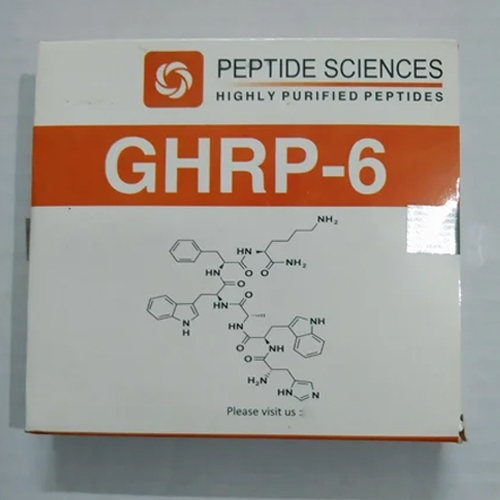
GHRP-6 emerged from this investigative landscape as a compound of considerable scientific interest. Its chemical designation—His-(D-Trp)-Ala-Trp-(D-Phe)-Lys-NH₂—belies a molecule of remarkable biological activity that operates through mechanisms distinct from those of GHRH. With a molecular weight of 872.44 Da, this synthetic hexapeptide has been extensively characterized in both preclinical and clinical settings.
The significance extends beyond its immediate biological effects. As the founding member of the GHRP family, its discovery ultimately led to the identification of the growth hormone secretagogue receptor (GHS-R1a) in 1996 and subsequently to the discovery of ghrelin—the endogenous ligand for this receptor—in 1999. This cascade of discoveries fundamentally altered our understanding of appetite regulation, energy homeostasis, and the neuroendocrine control of growth hormone secretion.
2. Chemical Structure and Discovery
2.1 Molecular Characterization
It is a synthetic hexapeptide comprising six amino acids: histidine (His), tryptophan (Trp), alanine (Ala), tryptophan (Trp), phenylalanine (Phe), and lysine (Lys). The inclusion of two D-amino acids—D-Trp at position 2 and D-Phe at position 5—is a critical structural feature that confers resistance to enzymatic degradation, thereby extending the molecule’s biological half-life.
The complete sequence is His-D-Trp-Ala-Trp-D-Phe-Lys-NH₂, with a molecular weight of approximately 873 g/mol. Structure-activity relationship studies have demonstrated that the three aromatic ring “core” structure, combined with basic amine groups, constitutes the essential pharmacophore required for biological activity. The amidated C-terminus is also crucial for receptor binding and biological efficacy.
2.2 Historical Discovery
The discovery traces back to the pioneering work of American endocrinologist Cyril Y. Bowers and his colleagues. In 1977, Bowers published seminal work describing the growth hormone-releasing properties of peptides derived from met-enkephalin that lacked any opiate properties. By 1981, Bowers reported that xenobiotic peptides derived from leucine- and methionine-enkephalins demonstrated novel growth hormone secretory activity.
Through systematic structure-activity relationship studies incorporating conformational energy calculations and peptide chemistry modifications, Bowers and colleagues developed GHRP-6. In 1984, GHRP-6 was characterized as the first synthetic peptide to specifically and dose-dependently release GH both in vitro and in vivo through a mechanism entirely distinct from GHRH.
This distinction was of paramount importance. Initial assumptions held that GHRP’s effects merely reflected GHRH activity, but by 1984, research clearly demonstrated that the actions of GHRH and GHRP were distinguishable from one another. This realization set the stage for the eventual discovery of an entirely new receptor system.
3. Mechanism of Action
3.1 Receptor Pharmacology
GHRP-6 exerts its pharmacological effects through activation of two distinct receptors: the growth hormone secretagogue receptor type 1a (GHS-R1a) and the scavenger receptor CD36. This dual receptor engagement accounts for both its neuroendocrine and cytoprotective properties.
GHS-R1a-Mediated Effects: GHS-R1a is a G protein-coupled receptor expressed at the level of the hypothalamus and anterior pituitary, where it mediates GH release. Beyond the central GH axis, GHS-R1a is also expressed in multiple peripheral tissues, including pancreatic islets, thyroid, adrenal tissue, adipose tissue, and myocardium. This widespread expression pattern provides biological plausibility for the pleiotropic effects of GHRP-6 beyond GH release.
CD36-Mediated Effects: CD36 is a scavenger receptor expressed in endothelial cells, immune cells, adipocytes, hepatocytes, and skeletal and cardiac muscle. Engagement of this receptor contributes to the cytoprotective actions of GHRP-6 observed in preclinical models.
3.2 Signal Transduction
The signal transduction mechanisms of GHRP-6 differ fundamentally from those of GHRH. Whereas GHRH activates adenylate cyclase and increases intracellular cAMP levels, GHRP-6 does not significantly alter cAMP levels in somatotroph models. Instead, GHRP-6 activates GHS-R1a on somatotrophs, triggering intracellular calcium transients and inducing phosphorylation of calcium/calmodulin-dependent protein kinase II (CaMKII).
GHRP-6 acts directly on somatotrophs to cause GH release, potentiates the actions of GHRH, and functions as a functional antagonist of somatostatin—the hypothalamic peptide that inhibits GH release. This multifaceted mechanism explains why GHRP-6 and GHRH exhibit synergistic effects when administered together.
3.3 Hypothalamic and Pituitary Actions
GHRP-6 acts at both hypothalamic and pituitary levels. The hypothalamus is the primary site of action in vivo, where GHRP-6 activates neuropeptide Y (NPY) neurons that co-express agouti-related peptide (AgRP) in the arcuate nucleus. This hypothalamic activation contributes both to GH release and to the orexigenic (appetite-stimulating) effects of the compound.
Importantly, GHRP-6 preserves physiological regulatory loops within the GH–IGF-1 axis, including somatostatin tone and IGF-1–mediated negative feedback. This distinguishes GHRP-6 from exogenous recombinant GH administration, which can suppress endogenous GH production through feedback inhibition.
4. Pharmacokinetics
4.1 Human Pharmacokinetic Profile
The pharmacokinetics of GHRP-6 have been systematically characterized in human subjects. In a pivotal study, nine healthy male volunteers received single intravenous bolus administrations of 100, 200, and 400 μg/kg of body weight. GHRP-6 was quantified in human plasma using a specific LC-MS method developed and validated following FDA guidelines.
The disposition of GHRP-6 best fitted a bi-exponential function with R² higher than 0.99. Averaging across all three dose levels, the distribution half-life was 7.6 ± 1.9 minutes, and the elimination half-life was 2.5 ± 1.1 hours. These values are consistent with existing data for other drugs whose disposition follows a two-compartment model.
4.2 Dose Dependence
Dose dependence analysis revealed a notable trend for the area under the curve (AUC) to increase proportionally with administered dose. This linear pharmacokinetic profile suggests predictable drug exposure across the studied dose range.
Atypical GHRP-6 concentration spikes were observed during the elimination phase in four out of the nine subjects studied. The clinical significance of this observation remains to be fully elucidated but may reflect enterohepatic recirculation or other distribution phenomena.
4.3 Routes of Administration
The bioavailability of GHRP-6 varies considerably depending on the route of administration. Intravenous administration provides the highest bioavailability, with 1 μg/kg of GHRP-6 releasing more GH than an equivalent dose of GHRH-44. Intranasal administration at 30 μg/kg has been shown to significantly increase nocturnal GH concentrations.
Sublingual administration shows only a trend toward GH increase, while oral administration (300 μg/kg as enteric-coated capsules) produces no significant changes in GH, ACTH, or cortisol secretion. These findings reflect the susceptibility of peptides to degradation in the gastrointestinal tract and first-pass metabolism.
5. Clinical Research and Therapeutic Applications
5.1 Diagnosis of Growth Hormone Deficiency
One of the most extensively studied clinical applications of GHRP-6 is in the diagnosis of growth hormone deficiency (GHD). The GHRH + GHRP-6 combined test has emerged as a valuable diagnostic tool for evaluating pituitary GH reserve.
Both the GHRH + GHRP-6 test and the arginine + GHRH test may serve as alternatives to the insulin tolerance test (ITT) in diagnosing GHD in adults. The GHRH + GHRP-6 test is described as convenient, safe, and reliable, with results that are not confounded by clinical factors that can complicate interpretation of other tests.
In patients with pituitary stalk transection, an almost complete blockade of GH response to either GHRP-6 alone or GHRH plus GHRP-6 has been observed. This finding suggests that the GHRP-6 test could serve as a cost-effective diagnostic tool for this condition.
The combined GHRH + GHRP-6 test has been proposed as a promising tool for diagnosing GH deficiency states in both children and adults. In children with severe GH insufficiency, the test effectively detects those requiring intervention. However, clinicians should be aware that the cut-off GH level of 15.0 μg/L after GHRH + GHRP-6 administration cannot be applied uniformly, as it is not valid in severely obese men.
5.2 Neuroprotective Effects
GHRP-6 has shown considerable promise in the field of neuroprotection, particularly in the context of acute ischemic stroke. A Phase I/II non-blinded randomized clinical trial evaluated the combination of epidermal growth factor (EGF) and GHRP-6 in patients with acute ischemic stroke.
Patients treated with EGF + GHRP-6 demonstrated favorable neurological and functional evolution at both 90 and 180 days. The study confirmed the hypothesis that this neuroprotective combination therapy could be safely administered to acute ischemic stroke patients.
Preclinical literature also describes potential cardioprotective actions of GHRP-6, such as reduced infarct size and protection of cardiomyocytes under ischemic conditions. However, it is important to note that these findings derive from animal and in vitro models and currently lack confirmatory evidence from large-scale human clinical trials.
5.3 Cardioprotective Effects
Extensive research from the Center for Genetic Engineering and Biotechnology (CIGB) in Havana, Cuba, has established GHRP-6 as a broad cytoprotective agent with documented protective effects in cardiac, hepatic, gastrointestinal, and neuronal tissues.
In a robust experimental model of myocardial infarction, GHRP-6 treatment reduced infarct area by 70% and limited its transmural extension. The study also confirmed that GHRP-6 exerted a potent antioxidant effect as part of the molecular mechanism responsible for its cardioprotective action.
More recent research has demonstrated that GHRP-6 prevents doxorubicin-induced cardiotoxicity through activation of PI3K/AKT pro-survival mechanisms. In a porcine model of acute myocardial infarction, GHRP-6 reduced myocardial injury, supporting its candidacy as a cardioprotective drug. This candidacy is further supported by the broad safety and tolerability profile observed upon parenteral administration.
The cytoprotective effects of GHRP-6 have been attributed to the prevention of cardiac ischemic dysfunction and to hormonal axis-mediated neuroprotective actions. A potent antioxidant effect has also been detected as part of the cardioprotective molecular mechanism.
5.4 Appetite Stimulation
A characteristic and clinically relevant effect of GHRP-6 is a consistent appetite-stimulating response, reflecting strong orexigenic signaling through the ghrelin pathway. This effect is particularly pronounced compared to other GHRP family members; while GHRP-2 produces mild to moderate appetite stimulation, GHRP-6 is recognized as a more potent appetite stimulant due to its strong ghrelin mimicry.
In animal studies, food intake was increased for up to seven hours following a single injection of GHRP-6. Intranasal administration of GHRP-6 has been shown to increase food intake by increasing both meal frequency and meal size. The orexigenic effect is mediated through activation of hypothalamic NPY/AgRP neurons in the arcuate nucleus.
5.5 Other Potential Applications
GHRP-6 has been investigated for a range of other potential applications. Research has demonstrated its ability to enhance tissue viability in different organs. Studies have also explored its potential to reduce liver fibrosis in chronically intoxicated animal models.
The peptide has been evaluated as an immunological adjuvant, with studies showing enhanced antibody titers against co-administered antigens. In veterinary and aquaculture settings, GHRP-6 has shown promise in improving growth performance. However, these applications remain at the investigational stage and have not been translated to clinical practice.
6. Safety Profile
6.1 Adverse Events in Clinical Studies
The safety of GHRP-6 has been evaluated in a Phase I dose-escalation clinical trial involving healthy male volunteers. The product was administered as a single intravenous dose at six levels: 1, 10, 50, 100, 200, and 400 μg/kg.
No serious adverse events were reported during the trial. However, six different adverse events were recorded in 12 subjects (66.7%), with sweating (50%), bradycardia (44.4%), and sleepiness (16.7%) being the most frequent. All adverse events exhibited a causal relation with the administered pharmaceutical product, and the number of adverse events increased with dosage level.
Bradycardia was the adverse event that demanded the most clinical attention. While no statistically significant correlation was detected between concentration and bradycardia, a clear trend was observed: as concentrations increased, cardiac frequencies tended to decrease. The duration of bradycardia ranged from approximately 55 minutes to three hours.
Other reported effects include transient increases in cortisol and prolactin, which may be relevant when considering potential endocrine side effects. It may also influence sleep architecture, with reported effects on REM/NREM sleep patterns.
6.2 Safety Concerns
Available data reveal safety concerns including potential effects on cortisol and increases in blood glucose due to decreases in insulin sensitivity. Compounded drugs containing it may pose a risk for immunogenicity for certain routes of administration due to the potential for aggregation and peptide-related impurities.
Subchronic safety assessment in animal models has identified adverse effects including hypersalivation, hypoactivity, reduced heart rate, changes in respiration, pale gums, and erythema of the head at higher doses. At doses up to 10 times the therapeutic dose, GHRP-6 is classified as non-toxic and non-irritating, but at doses greater than 60 times the therapeutic dose, adverse effects in the male reproductive system have been observed.
7. Regulatory Status
7.1 Global Regulatory Status
GHRP-6 is not approved for any therapeutic indication by the U.S. Food and Drug Administration (FDA) or other major regulatory agencies. It remains an investigational compound available only for research purposes.
United States: It is listed on the FDA’s Category 2 restricted compounding list. In 2026, following a political reclassification initiative, was expected to remain restricted under Category 2 while approximately 14 other peptides were moved to Category 1. However, Category 1 status does not constitute FDA approval, meaning no validated indications, standardized dosing, or established safety and efficacy data exist for these compounds.
FDA scientists unanimously recommended against adding peptides to the 503A Bulk Drug Substances List due to an effective absence of human clinical data. However, a reconstituted advisory panel voted to recommend several peptides for inclusion, overriding the agency’s own scientists. The FDA must still decide whether to accept the committee’s nonbinding recommendation, a process that can take 12 to 24 months.
Canada: Injectable peptides are regulated as prescription drugs, and selling unapproved products is illegal.
Australia: It is listed as a Schedule 4 (prescription-only) substance.
United Kingdom: Has not been approved by the MHRA.
7.2 Sports Doping Prohibition
GHRP-6 is prohibited in competitive sports. The World Anti-Doping Agency (WADA) lists GHRP-6 under Class S2 (Peptide Hormones, Growth Factors, and Related Substances). Growth hormone-releasing peptides are classified as Non-Specified Substances on the WADA Prohibited List.
The WADA Prohibited List explicitly includes it among other synthetic GH-releasing peptides, including alexamorelin, GHRP-1, GHRP-2 (pralmorelin), and hexarelin. Athletes found to have used GHRP-6 are subject to sanctions, as demonstrated by cases in various sports organizations.
8. Comparison with Other GHRPs
It serves as the prototype from which subsequent GHRPs were developed. Comparison with its close analogue GHRP-2 reveals important differences:
Potency: Based on available in vitro data, GHRP-2 demonstrates higher potency in stimulating growth hormone secretion from primary pituitary cells compared to GHRP-6. The EC₅₀ for GHRP-2 is approximately 0.1–1 nM, while GHRP-6 has an EC₅₀ of approximately 1–10 nM.
Appetite Stimulation: GHRP-6 is a more potent appetite stimulant due to its stronger ghrelin mimicry. This difference has clinical implications, as the orexigenic effect may be desirable in some contexts but problematic in others.
Signal Transduction: While both compounds activate the same receptor, subtle differences in signaling have been observed. Co-administration of GHRP-2 and GHRP-6 at maximal concentrations produces no further effect on GH release than either compound alone, confirming they act through the same receptor and mechanism.
9. Conclusion and Future Perspectives
GHRP-6 occupies a unique position in the history of endocrinology and peptide pharmacology. As the first synthetic peptide demonstrated to release GH through a mechanism distinct from GHRH, its discovery fundamentally altered our understanding of growth hormone regulation and ultimately led to the identification of the ghrelin system.
The compound has demonstrated considerable promise across multiple domains of research. In diagnostics, the GHRH + GHRP-6 test offers a safe and reliable alternative to the insulin tolerance test for evaluating GH deficiency. In neuroprotection, clinical trial data support the safety of EGF + GHRP-6 combination therapy in acute ischemic stroke. In cardioprotection, extensive preclinical evidence demonstrates significant reductions in infarct size and preservation of cardiac function.
However, significant challenges remain. It is not approved for any therapeutic indication worldwide. The safety profile, while acceptable in controlled clinical settings, reveals concerns including bradycardia, effects on glucose metabolism, and potential immunogenicity. The regulatory landscape remains uncertain, with the compound continuing to be classified as restricted in the United States.
Looking forward, several avenues warrant further investigation. The cytoprotective effects —particularly its cardioprotective and neuroprotective properties—merit continued exploration in well-designed clinical trials. The development of novel formulations that minimize adverse effects while preserving therapeutic efficacy could expand the compound’s clinical utility. Additionally, further elucidation of the molecular mechanisms underlying its pleiotropic effects may reveal new therapeutic applications.
For now, it remains what it has been for over four decades: a compound of immense scientific interest, with proven biological activity, but awaiting the definitive clinical evidence and regulatory approval that would establish its place in therapeutic practice. As research continues and our understanding of the ghrelin system deepens, GHRP-6 may yet find its definitive clinical niche.
References
1. Dominikowski A, Rękoś Z, Olejarz M, et al. The emerging landscape of performance-enhancing peptides modulating GH-IGF1 axis: bridging the gap between clinical evidence and patient self-administration. Frontiers in Endocrinology. 2026;17.
2. Cabrales A, et al. Pharmacokinetic study of Growth Hormone-Releasing Peptide 6 (GHRP-6) in nine male healthy volunteers. Eur J Pharm Sci. 2013;48(1-2):40-6.
3. Selman-Housein KB, Hernández BF, Abreu CÁA, et al. Clinical safety of Growth Hormone-Releasing Peptide
4. Growth Hormone Releasing Peptide-6: Research Evidence & Safety Profile. PeptideInsight. 2026.
5. FDA Peptide Reclassification 2026. AJMC. August 2026.
6. GHRH/GHRP-6 test for diagnosis of GH deficiency. PubMed.
You may also like…
5-Amino-1MQ 50mg (60 Capsules)
Original price was: £255.00.£225.00Current price is: £225.00.
Acetyl Hexapeptide-3 (Argireline)
Price range: £45.00 through £370.00